

GIRD

World Environment Day 2026

Report on World Environment Day 2026
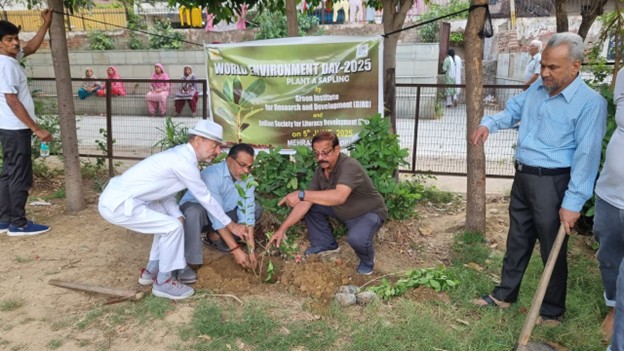
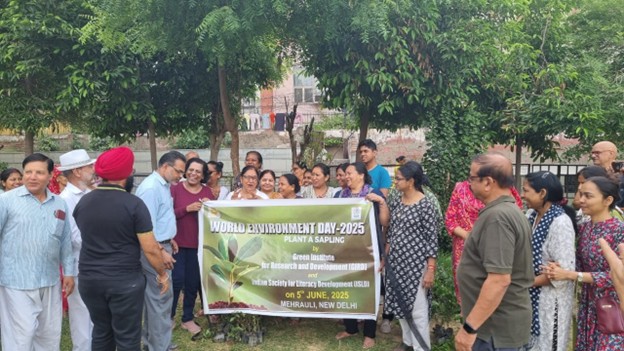
WORLD ENVIRONMENT DAY 2026 CELEBRATIONS BY GREEN INSTITUTE FOR RESEARCH AND DEVELOPMENT (GIRD)
On the occasion of World Environment Day 2026, the Green Institute for Research and Development (GIRD), in collaboration with Aashray Adhikar Abhiyan (AAA), organized a multi-dimensional grassroots awareness programs and an academic seminar in New Delhi. Driven by the global mandate for climate mitigation, the joint initiative brought together environmental scientists, community leaders, academic scholars, students, and citizens under a unified framework to address carbon footprint reduction and sustainable public behavior.

Grassroots Awareness Camp at Yamuna Plains
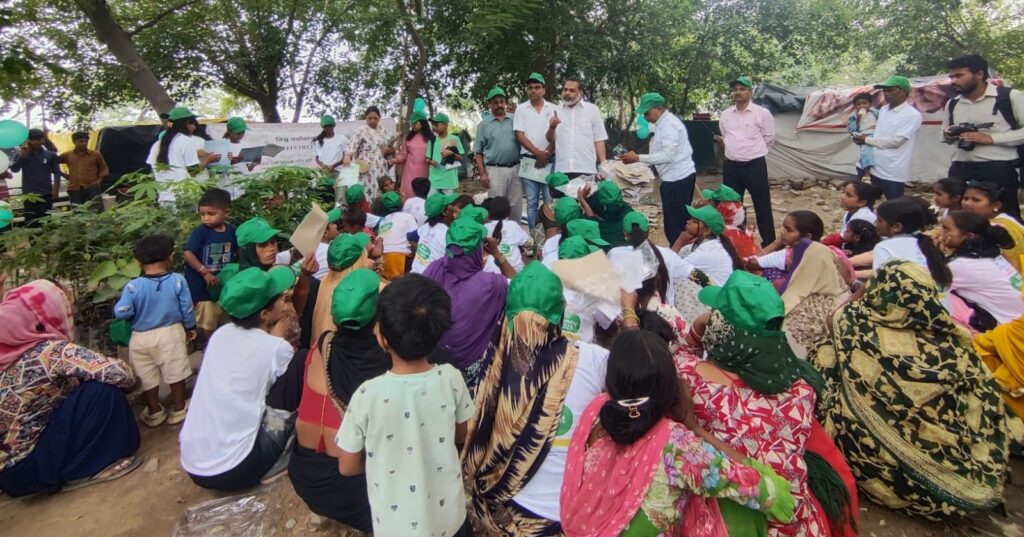
The day began with a highly interactive environmental awareness camp at the Yamuna Plains locality, situated adjacent to the Mayur Vihar Phase-1 Metro Station. This vulnerable ecosystem zone provided an ideal backdrop for discussing localized environmental actions. The camp targeted various civic cohorts, including students, youth, women, and marginalized local community segments.
The camp was led by Dr. K.P. Hareendran Achari, Mr. Shamsuddeen A.K., President and Secretary respectively of the Green Institute for Research and Development and Dr. Sanjay Kumar, Director, Aashray Adhikar Abhiyan, and other team members. They engaged the community directly, breaking down complex climate concepts into practical, everyday lifestyle choices. The local community demonstrated exceptional enthusiasm.

Swachhta & Climate Action Awareness Rally
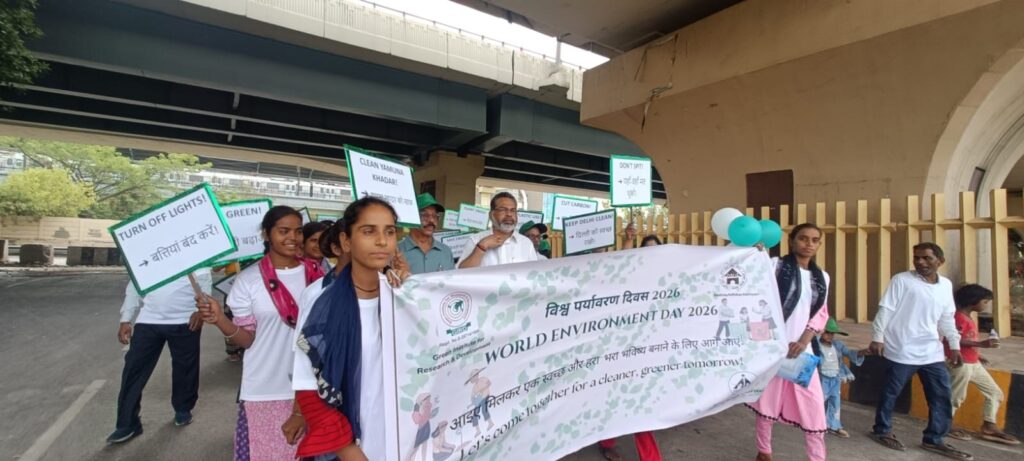
Following the baseline camp, an impressive 'Swachhta & Climate Action Rally' was mobilized through the central commercial and transit corridors surrounding the Mayur Vihar Phase-1 Metro Station. Marching dynamically with green caps and banners displaying environmental slogans, students and local community members social workers impressed the public.
The operational goal of the rally was to influence daily commuters and passersby. Slogans and placards emphasized key civic duties, including 'Stop Plastic Use', 'Plant Trees', 'Breathe Clean Air', and 'Turn Off Lights'. During this public mobilization, copies of the newly compiled guidebook titled “Carbon Emissions & Green Energy: A Public Guide for a Sustainable Future” were widely distributed to pedestrians, shopkeepers, and commuters to ensure institutional knowledge was directly transferred to the public ecosystem.

Public mobilization and awareness march passing underneath the Mayur Vihar Phase-1 Metro Station corridor.

Technical Seminar: Carbon Emissions & Green Energy Solutions

Later in the day a seminar was held. The seminar convened distinguished scientific minds and scholars to discuss low-carbon transition mechanisms and practical green pathways. The deliberations were led by the following panel of experts:

  • Prof. Dr. Sirajuddin Ahmed (Professor, Department of Civil Engineering, Jamia Millia Islamia University):
  • Dr. Shikha E. John (Scientist, Ministry of Earth Sciences, Government of India):
  • Dr. Anil Kumar (Former Director, Department of Environment, GNCTD (Delhi Government)
  • Shri R.K. Yadav (Environmental Specialist & Representative)

Souvenir/Booklet Launch & Core Action Plan

During the key plenary session, the dignitaries formally released the official Seminar Souvenir & Booklet. The publication serves as an actionable framework for public consumption, putting forth the collective core message that “No action is too small when millions of people act together.”

The seminar concluded with a 10-Point Action Plan adopted for widespread community implementation:

 ✔  Walk or cycle for short-distance transits to directly limit vehicular combustion.

 ✔  Transition to public transport infrastructure to lower per-capita emissions.

 ✔  Engage in continuous structural tree plantation to improve urban carbon sinks.

 ✔  Conserve energy by optimized utilization and turning off idle electronic appliances.

 ✔  Adopt reusable bags and systematically eliminate single-use plastics from households.

 ✔  Execute municipal waste segregation at source (biodegradable vs. non-biodegradable).

 ✔  Strictly avoid the open burning of municipal garbage or agricultural biomass.

 ✔  Conserve water resources through rainwater harvesting mechanisms and restricted usage.

 ✔  Promote, transition to, and adopt domestic renewable energy fixtures such as solar rooftops.

 ✔  Cultivate collective community responsibility towards local natural resource protection.
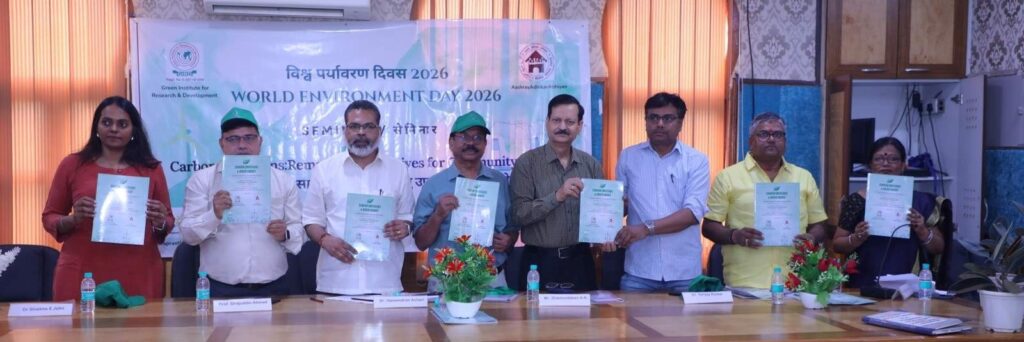
Formal release of the World Environment Day Souvenir & Public Guide by the distinguished guests at the Seminar.
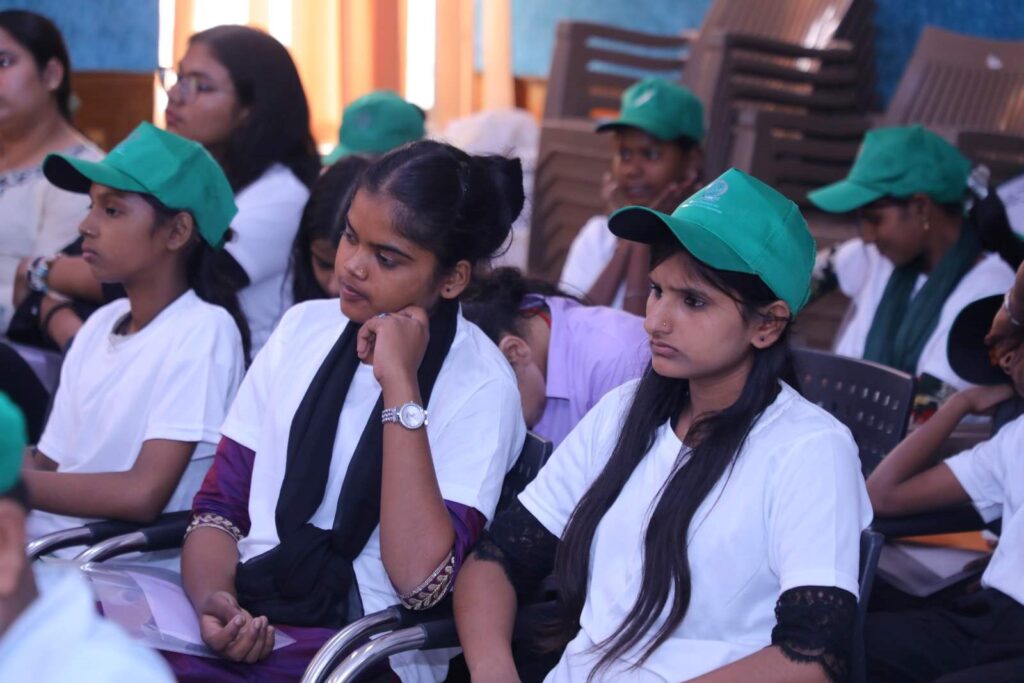
Students were eager participants in the Seminar